
Points rummy
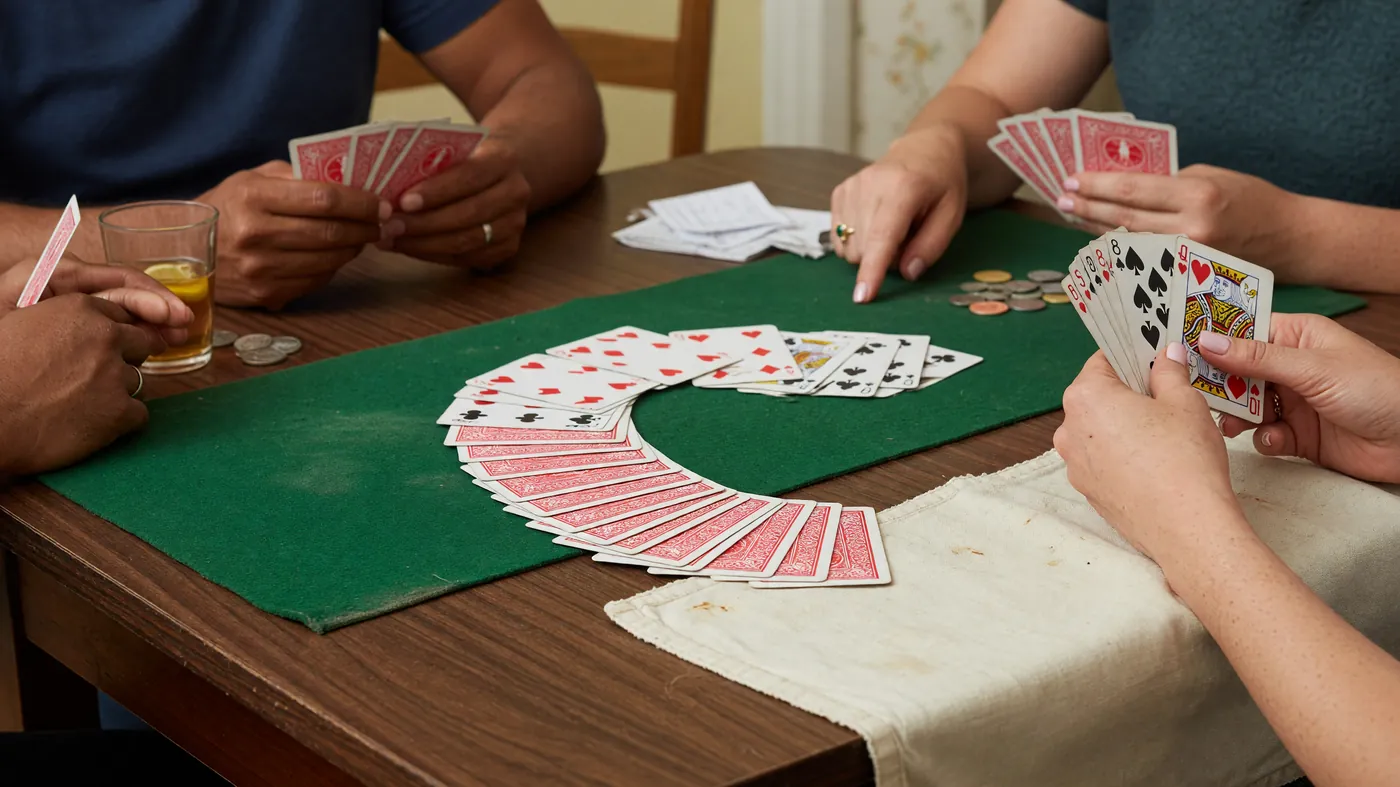
Points rummy is the shortest format and the easiest one to read. Each round settles a single point total. The winning player records zero, the losing player records the sum of their unmatched cards, and the difference is settled at stake value. A round of points rummy typically takes under ten minutes at a two-player table and slightly longer at a six-player table.
Points rummy rewards observation. The discard pile carries information about what the table cannot do. A player who reads it well wins more rounds per hour than a player who plays faster but loses the read.

A reading of the rummy formats an adult player is likely to meet.
Five formats sit at the heart of adult rummy play. Each one plays differently, each rewards a different kind of attention, and each comes with its own small disciplines. The notes below are working definitions, not house rules.

Points rummy
Points rummy is the shortest format and the easiest one to read. Each round settles a single point total. The winning player records zero, the losing player records the sum of their unmatched cards, and the difference is settled at stake value. A round of points rummy typically takes under ten minutes at a two-player table and slightly longer at a six-player table.
Points rummy rewards observation. The discard pile carries information about what the table cannot do. A player who reads it well wins more rounds per hour than a player who plays faster but loses the read.

Pool rummy
Pool rummy is points rummy run as a session. Players enter the pool with a fixed chip stack and play rounds until one player is eliminated at the elimination threshold (typically 101 or 201 points, depending on the room). The session pays out at fixed stake values and the last player standing collects the prize pool.
The skill load in pool rummy is bankroll discipline. A player who manages their stack calmly survives longer than a player who plays every round at maximum aggression. The format rewards the slow read of the table rather than the quick win of a single round.
Deals rummy
Deals rummy fixes the number of rounds in advance. A session of three deals gives each player three rounds to score points. The player with the lowest total at the end of the third deal wins the session.
Deals rummy is the format that most rewards tactical pacing. A player who sits out the first deal and watches the table's discard patterns enters the second deal with more information than a player who tries to win every round.
13-card traditional
13-card traditional is the format most often used in tournament play and in the home-game version described in the rules inventory. Each player receives 13 cards, the closed pile is the draw pile, and the discard pile is the public record of the table's reads. Declaration requires two sequences, one of which must be a pure sequence.
13-card traditional is the format with the highest observation load. The discards tell you what the table cannot do; the closed pile tells you what is possible; your own hand tells you what to do next. The format rewards consistent discipline more than peak brilliance.
21-card rummy
21-card rummy is the variant with the highest skill floor. Each player receives 21 cards, declaration requires two pure sequences and two sets, and the additional eight cards per hand widen the arithmetic and lengthen the round.
21-card rummy is not a beginner's format. The recommended path is to play 13-card traditional for at least a season before moving to 21-card rummy, and to play the first 21-card sessions at low stakes while learning the wider sort.
Gin rummy
Gin rummy is the two-player international variant. There is no joker, no pure sequence rule, and the player who forms all ten cards into sets and runs, or knocks with a low unmatched total, wins the round.
Gin rummy reads differently from the Indian formats because the discard pile is read in a different rhythm. There are no jokers to track, no pure sequences to defend, and the round ends faster. The format rewards a fast, accurate read of the opponent's hand.
How the desk reads a new format
The reading-room rule is to learn one format at a time. Play a single format for at least a season before adding the next. Read the rules inventory first. Read the discard window essay second. Read the platform review only after the format is in your hands. The order matters.
If the format you want is not in the glossary, the news desk files format additions under the format glossary. Submit a request through the contact desk and the editorial team will consider it for the next reading-room issue.
Continue reading

A reading of the rummy formats an adult player is likely to meet.
Five formats sit at the heart of adult rummy play. Each one plays differently, each rewards a different kind of attention, and each comes with its own small disciplines. The notes below are working definitions, not house rules.
Points rummy
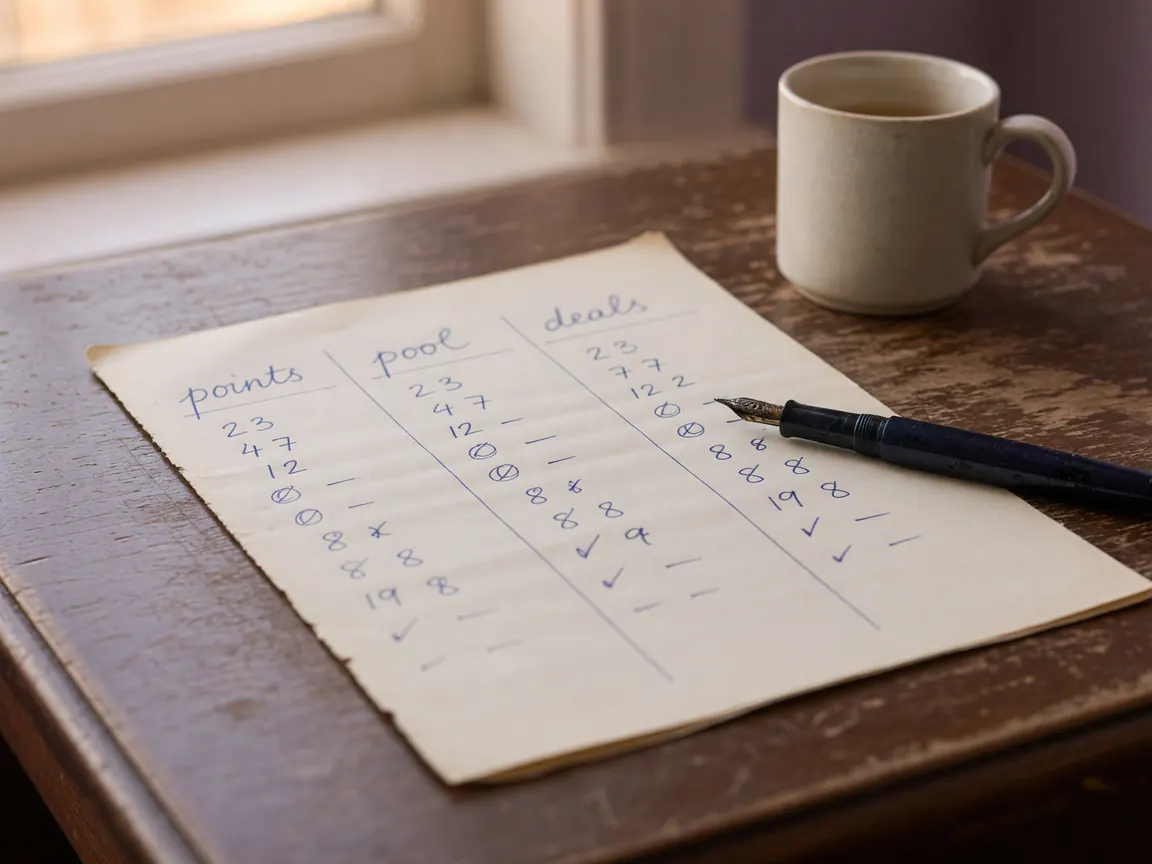
Points rummy is the shortest format and the easiest one to read. Each round settles a single point total. The winning player records zero, the losing player records the sum of their unmatched cards, and the difference is settled at stake value. A round of points rummy typically takes under ten minutes at a two-player table and slightly longer at a six-player table.
Points rummy rewards observation. The discard pile carries information about what the table cannot do. A player who reads it well wins more rounds per hour than a player who plays faster but loses the read.
Pool rummy
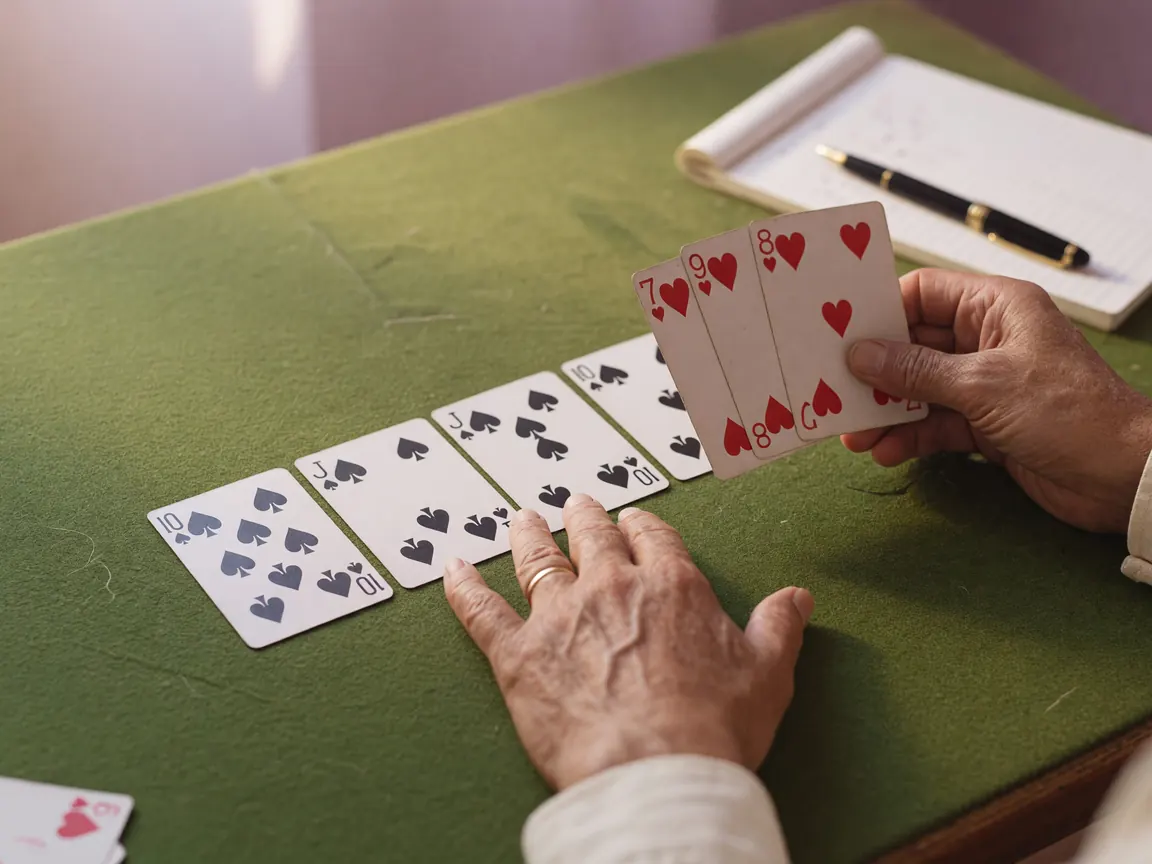
Pool rummy is points rummy run as a session. Players enter the pool with a fixed chip stack and play rounds until one player is eliminated at the elimination threshold (typically 101 or 201 points, depending on the room). The session pays out at fixed stake values and the last player standing collects the prize pool.
The skill load in pool rummy is bankroll discipline. A player who manages their stack calmly survives longer than a player who plays every round at maximum aggression. The format rewards the slow read of the table rather than the quick win of a single round.
Deals rummy
Deals rummy fixes the number of rounds in advance. A session of three deals gives each player three rounds to score points. The player with the lowest total at the end of the third deal wins the session.
Deals rummy is the format that most rewards tactical pacing. A player who sits out the first deal and watches the table's discard patterns enters the second deal with more information than a player who tries to win every round.
13-card traditional
13-card traditional is the format most often used in tournament play and in the home-game version described in the rules inventory. Each player receives 13 cards, the closed pile is the draw pile, and the discard pile is the public record of the table's reads. Declaration requires two sequences, one of which must be a pure sequence.
13-card traditional is the format with the highest observation load. The discards tell you what the table cannot do; the closed pile tells you what is possible; your own hand tells you what to do next. The format rewards consistent discipline more than peak brilliance.
21-card rummy
21-card rummy is the variant with the highest skill floor. Each player receives 21 cards, declaration requires two pure sequences and two sets, and the additional eight cards per hand widen the arithmetic and lengthen the round.
21-card rummy is not a beginner's format. The recommended path is to play 13-card traditional for at least a season before moving to 21-card rummy, and to play the first 21-card sessions at low stakes while learning the wider sort.
Gin rummy
Gin rummy is the two-player international variant. There is no joker, no pure sequence rule, and the player who forms all ten cards into sets and runs, or knocks with a low unmatched total, wins the round.
Gin rummy reads differently from the Indian formats because the discard pile is read in a different rhythm. There are no jokers to track, no pure sequences to defend, and the round ends faster. The format rewards a fast, accurate read of the opponent's hand.
How the desk reads a new format
The reading-room rule is to learn one format at a time. Play a single format for at least a season before adding the next. Read the rules inventory first. Read the discard window essay second. Read the platform review only after the format is in your hands. The order matters.
If the format you want is not in the glossary, the news desk files format additions under the format glossary. Submit a request through the contact desk and the editorial team will consider it for the next reading-room issue.
Continue reading

How to Play
The seven rules, the declaration logic, and the joker discipline.

A reading of the rummy formats an adult player is likely to meet.
Five formats sit at the heart of adult rummy play. Each one plays differently, each rewards a different kind of attention, and each comes with its own small disciplines. The notes below are working definitions, not house rules.

Points rummy
Points rummy is the shortest format and the easiest one to read. Each round settles a single point total. The winning player records zero, the losing player records the sum of their unmatched cards, and the difference is settled at stake value. A round of points rummy typically takes under ten minutes at a two-player table and slightly longer at a six-player table.
Points rummy rewards observation. The discard pile carries information about what the table cannot do. A player who reads it well wins more rounds per hour than a player who plays faster but loses the read.

Pool rummy
Pool rummy is points rummy run as a session. Players enter the pool with a fixed chip stack and play rounds until one player is eliminated at the elimination threshold (typically 101 or 201 points, depending on the room). The session pays out at fixed stake values and the last player standing collects the prize pool.
The skill load in pool rummy is bankroll discipline. A player who manages their stack calmly survives longer than a player who plays every round at maximum aggression. The format rewards the slow read of the table rather than the quick win of a single round.
Deals rummy
Deals rummy fixes the number of rounds in advance. A session of three deals gives each player three rounds to score points. The player with the lowest total at the end of the third deal wins the session.
Deals rummy is the format that most rewards tactical pacing. A player who sits out the first deal and watches the table's discard patterns enters the second deal with more information than a player who tries to win every round.
13-card traditional
13-card traditional is the format most often used in tournament play and in the home-game version described in the rules inventory. Each player receives 13 cards, the closed pile is the draw pile, and the discard pile is the public record of the table's reads. Declaration requires two sequences, one of which must be a pure sequence.
13-card traditional is the format with the highest observation load. The discards tell you what the table cannot do; the closed pile tells you what is possible; your own hand tells you what to do next. The format rewards consistent discipline more than peak brilliance.
21-card rummy
21-card rummy is the variant with the highest skill floor. Each player receives 21 cards, declaration requires two pure sequences and two sets, and the additional eight cards per hand widen the arithmetic and lengthen the round.
21-card rummy is not a beginner's format. The recommended path is to play 13-card traditional for at least a season before moving to 21-card rummy, and to play the first 21-card sessions at low stakes while learning the wider sort.
Gin rummy
Gin rummy is the two-player international variant. There is no joker, no pure sequence rule, and the player who forms all ten cards into sets and runs, or knocks with a low unmatched total, wins the round.
Gin rummy reads differently from the Indian formats because the discard pile is read in a different rhythm. There are no jokers to track, no pure sequences to defend, and the round ends faster. The format rewards a fast, accurate read of the opponent's hand.
How the desk reads a new format
The reading-room rule is to learn one format at a time. Play a single format for at least a season before adding the next. Read the rules inventory first. Read the discard window essay second. Read the platform review only after the format is in your hands. The order matters.
If the format you want is not in the glossary, the news desk files format additions under the format glossary. Submit a request through the contact desk and the editorial team will consider it for the next reading-room issue.
Continue reading

How to Play
The seven rules, the declaration logic, and the joker discipline.
Strategy ledger
The discard window, sequence probability, and the bankroll rhythm note.
A reading of the rummy formats an adult player is likely to meet.
Five formats sit at the heart of adult rummy play. Each one plays differently, each rewards a different kind of attention, and each comes with its own small disciplines. The notes below are working definitions, not house rules.

Points rummy
Points rummy is the shortest format and the easiest one to read. Each round settles a single point total. The winning player records zero, the losing player records the sum of their unmatched cards, and the difference is settled at stake value. A round of points rummy typically takes under ten minutes at a two-player table and slightly longer at a six-player table.
Points rummy rewards observation. The discard pile carries information about what the table cannot do. A player who reads it well wins more rounds per hour than a player who plays faster but loses the read.
Pool rummy
Pool rummy is points rummy run as a session. Players enter the pool with a fixed chip stack and play rounds until one player is eliminated at the elimination threshold (typically 101 or 201 points, depending on the room). The session pays out at fixed stake values and the last player standing collects the prize pool.
The skill load in pool rummy is bankroll discipline. A player who manages their stack calmly survives longer than a player who plays every round at maximum aggression. The format rewards the slow read of the table rather than the quick win of a single round.
Deals rummy
Deals rummy fixes the number of rounds in advance. A session of three deals gives each player three rounds to score points. The player with the lowest total at the end of the third deal wins the session.
Deals rummy is the format that most rewards tactical pacing. A player who sits out the first deal and watches the table's discard patterns enters the second deal with more information than a player who tries to win every round.
13-card traditional
13-card traditional is the format most often used in tournament play and in the home-game version described in the rules inventory. Each player receives 13 cards, the closed pile is the draw pile, and the discard pile is the public record of the table's reads. Declaration requires two sequences, one of which must be a pure sequence.
13-card traditional is the format with the highest observation load. The discards tell you what the table cannot do; the closed pile tells you what is possible; your own hand tells you what to do next. The format rewards consistent discipline more than peak brilliance.
21-card rummy
21-card rummy is the variant with the highest skill floor. Each player receives 21 cards, declaration requires two pure sequences and two sets, and the additional eight cards per hand widen the arithmetic and lengthen the round.
21-card rummy is not a beginner's format. The recommended path is to play 13-card traditional for at least a season before moving to 21-card rummy, and to play the first 21-card sessions at low stakes while learning the wider sort.
Gin rummy
Gin rummy is the two-player international variant. There is no joker, no pure sequence rule, and the player who forms all ten cards into sets and runs, or knocks with a low unmatched total, wins the round.
Gin rummy reads differently from the Indian formats because the discard pile is read in a different rhythm. There are no jokers to track, no pure sequences to defend, and the round ends faster. The format rewards a fast, accurate read of the opponent's hand.
How the desk reads a new format
The reading-room rule is to learn one format at a time. Play a single format for at least a season before adding the next. Read the rules inventory first. Read the discard window essay second. Read the platform review only after the format is in your hands. The order matters.
If the format you want is not in the glossary, the news desk files format additions under the format glossary. Submit a request through the contact desk and the editorial team will consider it for the next reading-room issue.