The strict reading
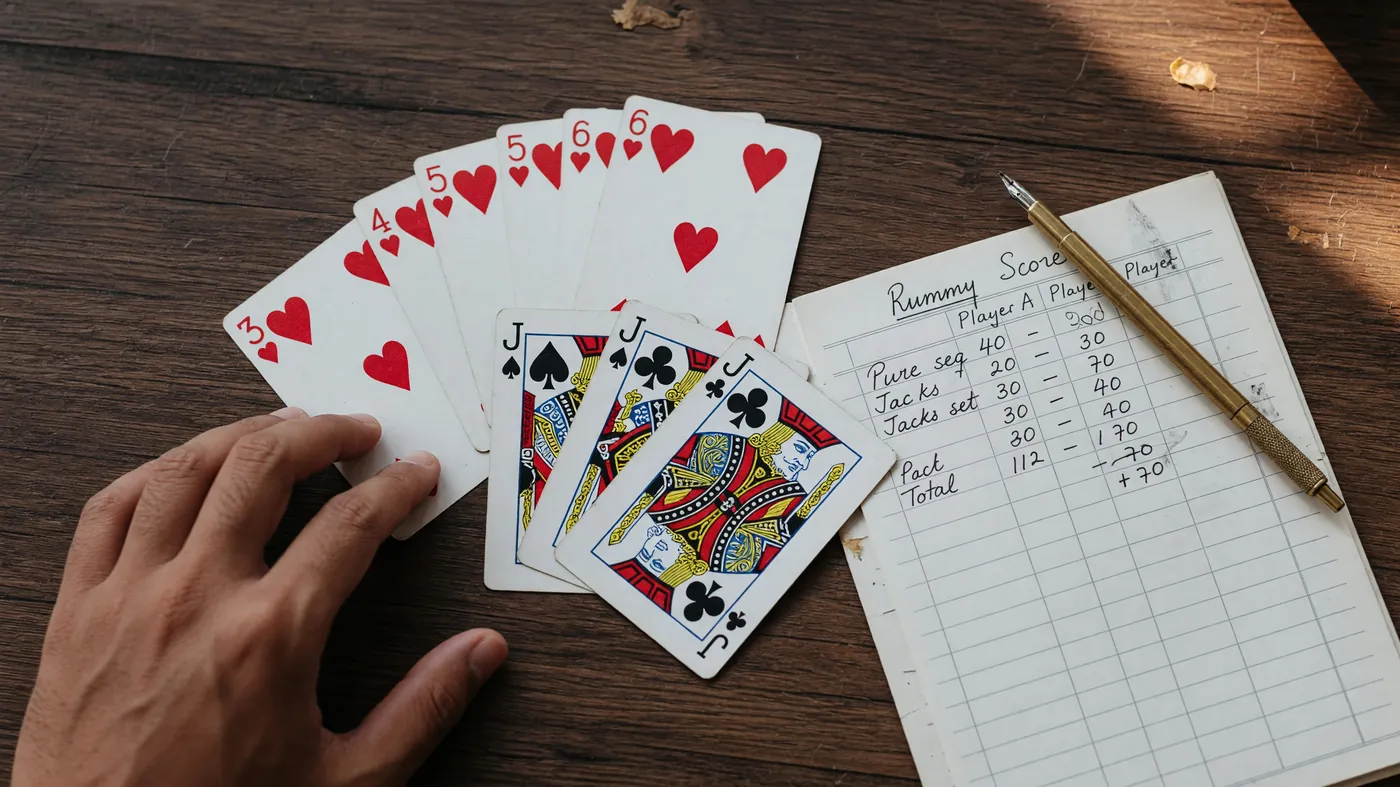
A valid declaration requires at least two sequences, one of which must be a pure sequence (a run of three or more consecutive cards of the same suit without a joker), with the remaining cards arranged in valid sets or additional sequences. The declared hand must total zero points in unmatched cards. A hand without a pure sequence is an invalid declaration.
The five parts of a declaration
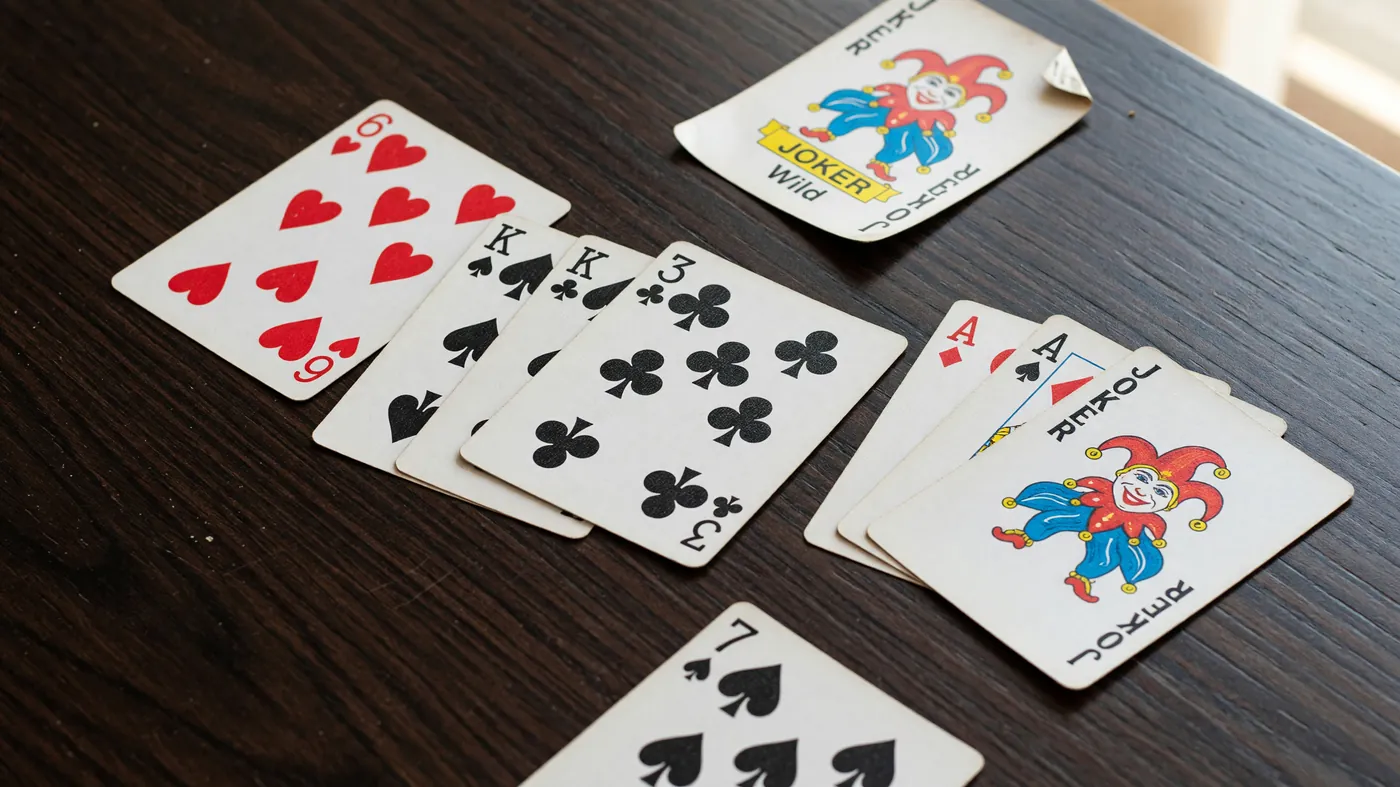
- Pure sequence. Required. Three or more consecutive cards of the same suit. No joker.
- Second sequence. Required. Pure or impure. With or without joker.
- Set. Required at least one. Three or four cards of the same rank, different suits.
- Additional sequences or sets. Optional. Use up the remaining cards.
- Unmatched cards. Must total zero points at declaration.
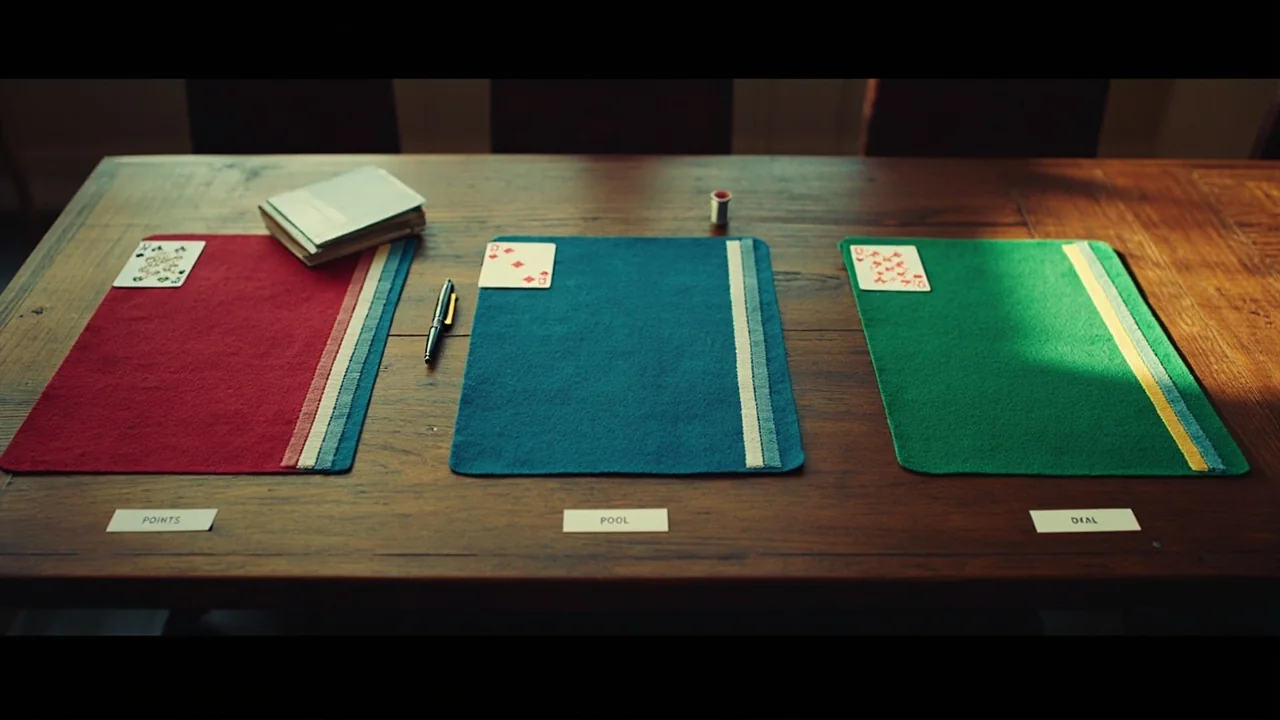
Diagrams of the five parts
The invalid declaration
A declaration that does not meet all five parts is invalid and scores 80 points. The most common invalid declaration is one without a pure sequence. The second most common is one with a pure sequence but no second sequence. The third is one with a pure sequence and a second sequence but no set.
How to defend a declaration
Describe your hand in one sentence. If the sentence fits in thirty words, the hand is ready. If not, the hand is not. A lost round at zero cost is cheaper than an invalid declaration of 80 points.